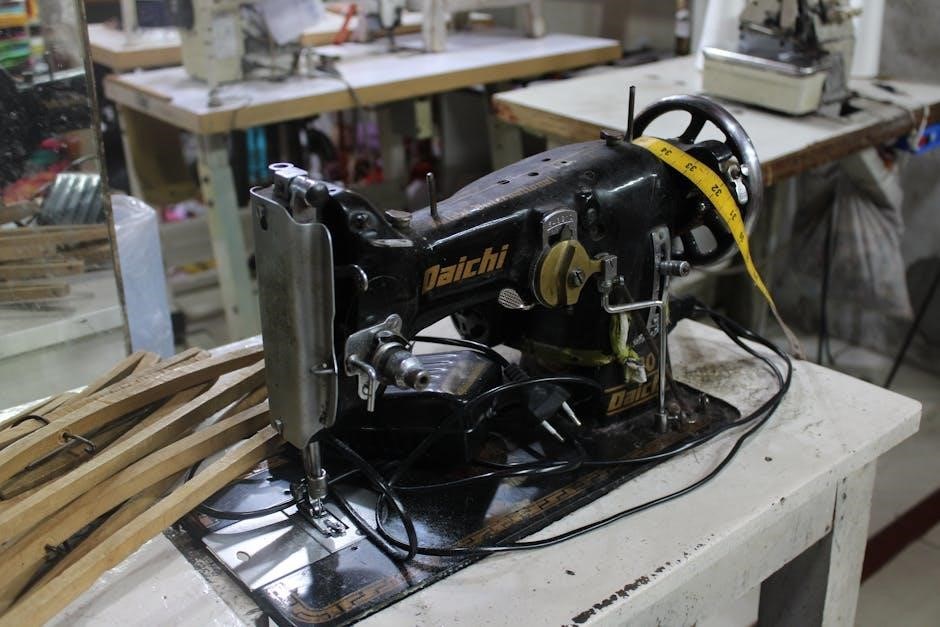
Kenmore model 385 boasts readily available instruction manuals, including service and owner’s guides, often downloadable as PDFs for convenient printing and reference.
Overview of the Model 385
The Kenmore 385 is a popular, reliable sewing machine supported by comprehensive documentation. Available manuals – service and owner’s – detail parts identification, threading, and operation.
These resources, often found online in PDF format, cover basic to advanced techniques. The 385 series (like 385;17126690) offers versatile stitching, and the manuals assist with troubleshooting common issues like thread breakage or skipped stitches, ensuring longevity and ease of use.
Key Features and Benefits
Kenmore 385 manuals unlock the machine’s full potential, detailing stitch patterns and operational benefits. Accessing these guides provides clear instructions for features like buttonhole sewing and zigzag stitching.
The readily available service manuals empower users to perform basic maintenance, extending the machine’s lifespan. Downloadable PDFs offer convenient access to troubleshooting, ensuring a smooth sewing experience and maximizing the machine’s versatility.
Getting Started: Initial Setup
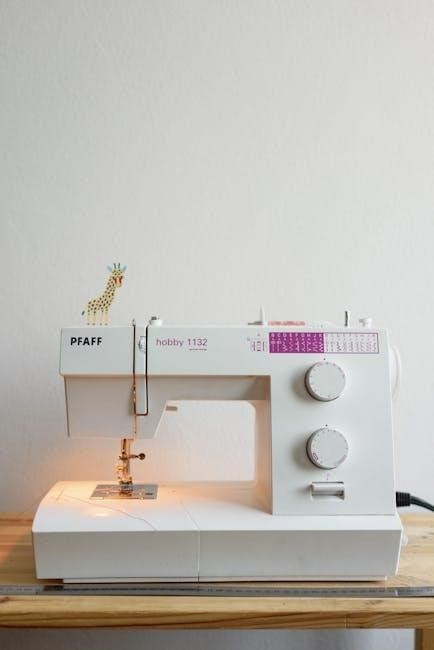
Kenmore 385 manuals guide initial setup, covering component identification, power cord attachment, and foot pedal connection for immediate use.
Unboxing and Component Identification
Kenmore 385 manuals detail careful unboxing procedures, emphasizing identifying all included parts. Expect the machine itself, a foot pedal, power cord, various presser feet, bobbins, needle sets, screwdriver, and potentially a seam guide or brush.
The manual assists in verifying all components are present, preventing frustration later. Diagrams often illustrate each part, aiding quick recognition and understanding of their function within the sewing system.
Attaching the Power Cord and Foot Pedal
Kenmore 385 manuals clearly illustrate connecting the power cord to the machine and a grounded electrical outlet. The foot pedal connects via a designated port, often with a secure clip.
Instructions emphasize ensuring a firm connection for both, preventing interruptions during sewing. Diagrams show proper port locations and cable routing. Always unplug before maintenance, as highlighted in safety sections of the manual.
Winding the Bobbin
Kenmore 385 manuals detail bobbin winding, starting with thread placement on the spool pin and guiding it through tension discs. The thread wraps around the bobbin, controlled by a winding lever.
Instructions emphasize proper tension for even winding and a full bobbin. Diagrams illustrate the winding path and lever operation. Manuals advise stopping when full to prevent overflow and potential machine issues.
Threading the Kenmore 385
Kenmore 385 manuals provide detailed threading diagrams for both upper and lower threads, emphasizing correct path and tension for optimal stitch formation.
Upper Threading Guide
Kenmore 385 manuals illustrate a precise upper threading sequence, starting with the spool pin and guiding the thread through tension discs, take-up lever, and finally, the needle.
Detailed diagrams show the correct path, ensuring smooth thread flow and preventing skipped stitches.
Proper threading is crucial; manuals emphasize verifying thread engagement at each step.
Incorrect threading is a common cause of sewing issues, so careful attention to the manual’s instructions is vital for successful operation.
Lower Threading (Bobbin Insertion)
Kenmore 385 manuals detail bobbin insertion, specifying the correct bobbin type and winding direction.
Instructions guide users to place the bobbin into the bobbin case, ensuring the thread unwinds correctly.
The manual emphasizes proper bobbin case insertion into the machine, often with a “click” to confirm secure placement.
Correct bobbin threading is essential for balanced stitches and preventing nesting on the fabric’s underside.
Thread Tension Adjustment
Kenmore 385 manuals explain thread tension’s crucial role in stitch quality, detailing how to adjust the dial for different fabrics and thread types.
Instructions advise testing tension on scrap fabric, observing the stitch formation for balanced loops.
Too much tension causes puckering; too little leads to looping.
The manual guides users to make small adjustments, noting that proper tension ensures even, durable seams.
Basic Sewing Operations
Kenmore 385 manuals detail selecting stitch patterns, straight stitching, and zigzag stitching, providing clear guidance for fundamental sewing tasks and practice.
Selecting Stitch Patterns
Kenmore 385 manuals illustrate how to choose from various stitch patterns using dial selections, clearly depicting each stitch’s appearance and intended use. The guides explain adjusting stitch length and width for different fabrics and projects.
Detailed diagrams show the stitch pattern selector and corresponding stitch types, ensuring users can confidently select the appropriate stitch for seams, decorative work, or specialized applications. Proper stitch selection is crucial for achieving professional results.
Straight Stitching
Kenmore 385 manuals emphasize straight stitching as the foundational technique, detailing proper thread tension and fabric feed adjustments. Instructions guide users to select the appropriate stitch length based on fabric weight – shorter for delicate materials, longer for heavier ones.
The guides illustrate maintaining a consistent seam allowance using the needle plate markings, ensuring accurate and professional results. Practice is encouraged to develop a steady hand and consistent stitch quality.
Zigzag Stitching
Kenmore 385 manuals explain zigzag stitching’s versatility for finishing raw edges, creating decorative elements, and sewing stretch fabrics. Users learn to adjust stitch width and length for varied effects, with guidance on preventing puckering.
The instructions detail utilizing zigzag for buttonholes (prior to dedicated buttonhole features) and applying elastic. Mastering width control is key for professional-looking applications, as highlighted in the provided resources.
Advanced Stitching Techniques
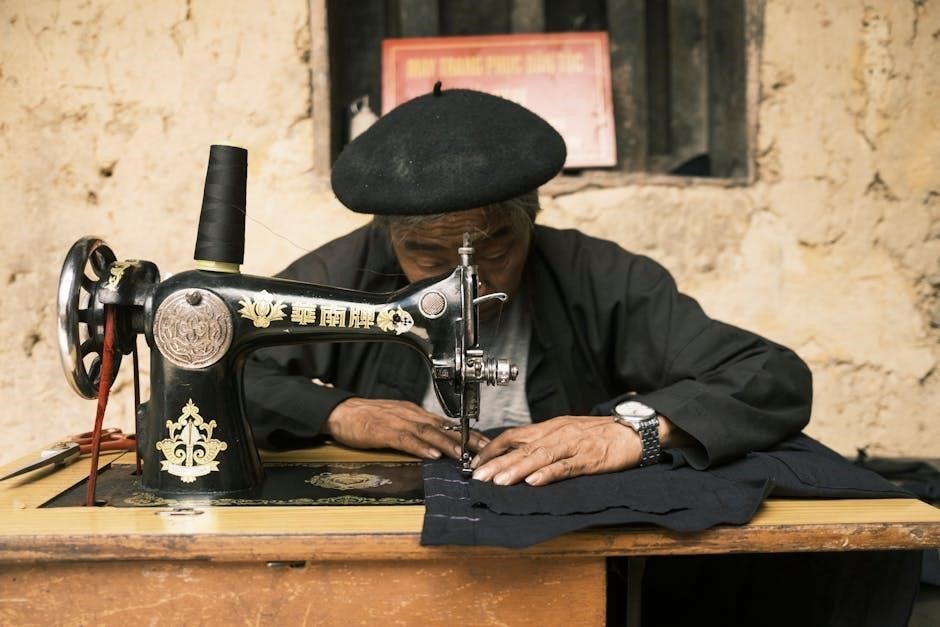
Kenmore 385 manuals cover techniques like buttonhole sewing, zipper insertion, and potentially overlock stitching, offering detailed steps for skilled results.
Buttonhole Sewing
Kenmore 385 manuals detail buttonhole creation, guiding users through selecting the appropriate buttonhole foot and stitch settings. Instructions emphasize precise fabric placement and following the marked guidelines on the needle plate. The manual clarifies adjusting buttonhole width to match button size, ensuring a professional finish. It also explains how to reinforce the buttonhole ends for durability, preventing unraveling with repeated use. Diagrams illustrate each step, making this advanced technique accessible to all skill levels.
Zipper Insertion
Kenmore 385 manuals provide detailed instructions for various zipper insertion techniques, including centered, overlapped, and invisible zippers. They recommend using the appropriate zipper foot for optimal results and guide users through stitch selection for secure and aesthetically pleasing seams. The manual stresses consistent seam allowance and careful pinning to prevent puckering. Diagrams illustrate proper zipper alignment and demonstrate techniques for smoothly navigating corners and curves during sewing.
Overlock Stitching (if applicable)
The Kenmore 385 manual indicates overlock stitching capabilities may vary depending on the specific sub-model. If equipped, the manual details settings for creating professional-finished edges, preventing fabric fraying. It explains proper thread usage and tension adjustments for a balanced overlock stitch. Users are guided to select the correct stitch width and length for different fabric types, ensuring durable and neat seam finishes.

Maintenance and Troubleshooting
Kenmore 385 manuals emphasize regular cleaning and oiling, detailing specific lubrication points. They also offer solutions for common issues like thread breakage and jamming.
Cleaning the Sewing Machine
Kenmore 385 manuals consistently stress the importance of routine cleaning for optimal performance. Dust and lint accumulation can cause malfunctions, so regular removal is crucial. Instructions detail using a brush to clear debris from the bobbin area, feed dogs, and around the needle plate.
Power off and unplug the machine before cleaning. The manual advises against using liquids directly on the machine; instead, a soft, dry cloth is recommended for wiping exterior surfaces. Consistent cleaning extends the machine’s lifespan and ensures smooth operation.
Oil Points and Lubrication
Kenmore 385 service manuals highlight specific oil points vital for smooth operation. These include the motor, gears, and key moving parts within the machine. Instructions emphasize using sewing machine oil – never household oil – to prevent gumming and damage.
The manual details where to apply oil sparingly, avoiding over-lubrication. Regular oiling, as per the manual’s guidance, minimizes friction, reduces wear, and maintains the machine’s precision. Proper lubrication is key to a long and reliable sewing experience.
Common Problems and Solutions
Kenmore 385 manuals address frequent issues like thread breakage, skipped stitches, and machine jamming. Instructions guide users through troubleshooting steps, often starting with re-threading both upper and lower threads correctly.
Solutions include checking the needle for damage or incorrect size, ensuring proper tension adjustment, and cleaning lint buildup. The service manual provides detailed diagrams and explanations to diagnose and resolve these common sewing machine malfunctions, extending the machine’s lifespan.
Understanding Machine Parts
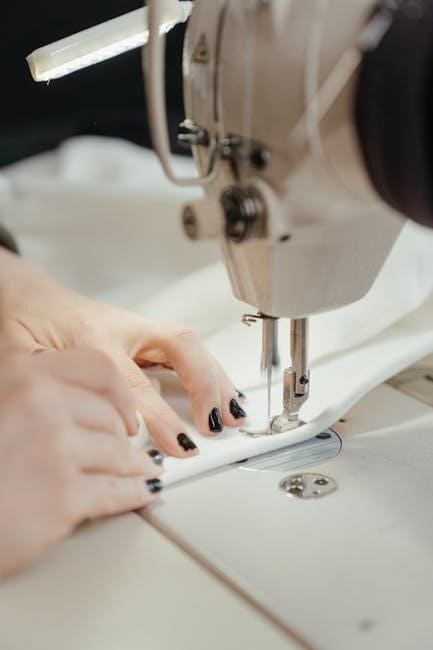
Kenmore 385 manuals detail parts like the needle plate, presser feet, and handwheel, offering diagrams to locate and identify each component for maintenance.
Needle Plate and Markings
Kenmore 385 manuals emphasize the needle plate’s crucial role, illustrating its markings for accurate seam allowances and guiding fabric during sewing. These markings, often in inches, assist with consistent stitch placement.
The manual details how to align fabric edges with these indicators, ensuring straight and precise sewing lines. Understanding these markings is vital for achieving professional-looking results and mastering various sewing techniques with your Kenmore machine.
Presser Foot Options
The Kenmore 385 sewing machine manual highlights a variety of presser feet, each designed for specific tasks. Standard feet handle general sewing, while specialized options tackle zippers, buttonholes, and decorative stitches.
The manual provides detailed instructions on changing presser feet, ensuring a secure fit. Utilizing the correct foot significantly improves stitch quality and simplifies complex sewing projects, maximizing the machine’s versatility.
Handwheel and Flywheel
The Kenmore 385 manual explains the handwheel’s function for precise needle placement, especially useful for starting and ending seams or navigating tight curves. Rotating it clockwise lowers the needle, while counter-clockwise raises it.
The flywheel, connected to the handwheel, ensures smooth operation. The manual cautions against forcing the handwheel, as it could damage the internal mechanisms. Proper use allows for controlled stitching.
Safety Precautions
Kenmore 385 manuals emphasize general safety, needle handling, and electrical precautions; always disconnect power before maintenance and use caution with the needle.
General Safety Guidelines
Kenmore 385 manuals strongly advise reading all instructions before operation, ensuring user understanding of the machine’s functions. Always disconnect the power cord during threading, bobbin replacement, or cleaning. Never operate the machine with damaged parts, and keep fingers away from moving components like the needle and presser foot.
Supervise children when near the machine, and avoid using it if feeling unwell or fatigued. Proper machine operation, as detailed in the manual, minimizes risk and ensures a safe sewing experience.
Needle Safety
Kenmore 385 manuals emphasize extreme caution around the needle. Always turn off and unplug the machine before changing needles. Use the correct needle type and size for your fabric, as specified in the manual, to prevent breakage. Never sew over pins or thick materials that could damage the needle.
Dispose of broken needles carefully to avoid injury. The manual details proper needle insertion and removal techniques, prioritizing user safety during these essential maintenance tasks.
Electrical Safety
Kenmore 385 manuals strongly advise always unplugging the machine before cleaning, changing parts, or performing any maintenance. Never operate the machine with a damaged cord or plug. Avoid using extension cords if possible, and if necessary, ensure they are appropriately rated for the machine’s power requirements.
The manual cautions against exposing the machine to water or moisture, preventing electrical shock hazards. Regular inspection of the power cord is recommended for wear and tear.
Accessing Manuals and Resources
Kenmore appliance manuals, including the 385 model, are easily accessible online via the Kenmore website, offering both owner’s and service manuals.
Downloading the Service Manual
Locating the Kenmore 385 service manual is achievable through online searches; specifically, resources like the Internet Archive host downloadable PDFs (e.g., 385.17126690).
These manuals, often spanning around 30 pages and 587KB in size, provide detailed schematics and repair guidance. They are invaluable for advanced troubleshooting and understanding the machine’s internal workings, aiding in comprehensive maintenance and repair efforts.
Locating the Owner’s Manual
Kenmore provides access to owner’s manuals for the 385 model via their website; simply enter your specific model number (like 385.11607) into the search bar.
These manuals, often around 56 pages and 3MB in size, offer essential operating instructions and care guidelines. They are available as downloadable PDFs, allowing for easy printing and self-reliance in learning to use your sewing machine effectively.
Online Forums and Support Communities
Beyond official Kenmore resources, numerous online forums and communities cater to vintage sewing machine enthusiasts, including those using the 385 model.
These platforms offer a wealth of user-generated content, troubleshooting tips, and shared experiences. Users frequently exchange manual scans and provide assistance with specific issues, supplementing the official documentation and fostering a collaborative learning environment.
Troubleshooting Specific Issues
Kenmore 385 manuals aid in resolving common problems like thread breakage, skipped stitches, and machine jamming, offering diagnostic steps and solutions.
Thread Breakage
Kenmore 385 manuals address thread breakage by suggesting re-threading both upper and lower threads correctly, ensuring proper tension adjustment, and verifying the needle’s suitability for the fabric.
They also recommend checking for burrs on the bobbin case or needle plate, and using quality thread. Incorrect threading or tension are frequently cited causes, alongside dull or damaged needles.
Skipped Stitches
Kenmore 385 manuals pinpoint skipped stitches to several potential issues. These include using the wrong needle type or size for the fabric, a dull or bent needle, and incorrect threading of the upper thread.
Proper needle insertion height and ensuring the presser foot pressure are correctly adjusted are also crucial. Check the timing of the machine if issues persist, as detailed in the service manual.
Machine Jamming
Kenmore 385 manuals address jamming, often caused by fabric accumulation around the bobbin area. This necessitates carefully removing tangled threads, ensuring the bobbin is correctly inserted, and the tension is appropriately set.
Incorrect threading, using excessively thick fabric, or a bent needle can also contribute. The service manual advises inspecting the feed dogs for damage or obstruction before resuming operation.

Optional Accessories
Kenmore 385 manuals detail various presser feet, bobbin cases, and extension tables available to enhance sewing capabilities and project versatility.
Presser Feet
Kenmore 385 manuals illustrate a range of presser feet designed for specialized tasks. These include standard zigzag feet, buttonhole feet for consistent results, and zipper feet for close-edge stitching. Further options, often sold separately, encompass blind hem feet, rolled hem feet, and even quilting feet, expanding the machine’s functionality. The manual provides guidance on proper foot selection based on fabric type and desired stitch application, ensuring optimal performance and professional-looking finishes.
Bobbin Cases
Kenmore 385 sewing machine manuals detail the importance of using the correct bobbin case for optimal stitch quality. While typically a standard class 15 bobbin is utilized, variations exist across sub-models. The manual emphasizes proper bobbin case insertion and tension adjustment for smooth operation. Replacement bobbin cases are available, and the guide clarifies identifying compatible options to maintain consistent performance and prevent skipped stitches or thread bunching.
Extension Tables
Kenmore 385 sewing machine manuals don’t prominently feature dedicated extension tables as standard accessories. However, compatibility with universal extension tables is often possible, enhancing workspace for larger projects like quilts. Owners frequently source these separately. The manual focuses on the machine’s base functionality, but online communities discuss suitable extensions. Utilizing an extension table improves fabric handling and overall sewing comfort during extended use.
Kenmore Model Variations (385.xxxx)
Kenmore 385 models feature sub-variations (e.g., 385.17126690) with slight differences; service manuals help identify specific parts and address unique issues.
Identifying Specific Sub-Models
Kenmore 385 sewing machines come in numerous sub-model variations, denoted by a series of numbers following the core “385” designation – for example, 385.11607 or 385.17126690.
Precisely identifying your specific sub-model is crucial when sourcing the correct instruction manual or service manual. These manuals often contain diagrams and instructions tailored to the nuances of each variation. The full model number is typically found on a label affixed to the machine itself.
Differences Between Variations
While fundamentally similar, Kenmore 385 sub-models can exhibit subtle differences impacting operation and repair. Variations may involve differing stitch patterns, features, or internal component configurations.
Consequently, using a manual intended for a different sub-model could lead to incorrect procedures or incompatibility. The service manuals detail these specific distinctions, aiding in accurate troubleshooting and maintenance. Always confirm the manual’s model number matches your machine’s precisely.
Care and Storage
Manuals recommend protecting your Kenmore 385 from dust and damage during storage, ensuring longevity and optimal performance upon future use.
Long-Term Storage Tips
Kenmore 385 manuals suggest a thorough cleaning and light oiling before long-term storage, protecting against corrosion. Cover the machine with a dust cover or cloth to prevent particle accumulation.
Store in a cool, dry place, avoiding humidity and extreme temperatures; Release tension on the handwheel and consider a case for added protection. Regularly check the machine if stored for extended periods, ensuring continued functionality.
Protecting Against Dust and Damage
Kenmore 385 manuals emphasize using a dust cover as a primary defense against particle buildup during storage or infrequent use. Regularly brush away lint and debris from the bobbin area and feed dogs.
Avoid storing the machine where it could be bumped or subjected to impact. Proper covering and careful placement minimize scratches and potential mechanical damage, preserving its longevity.